
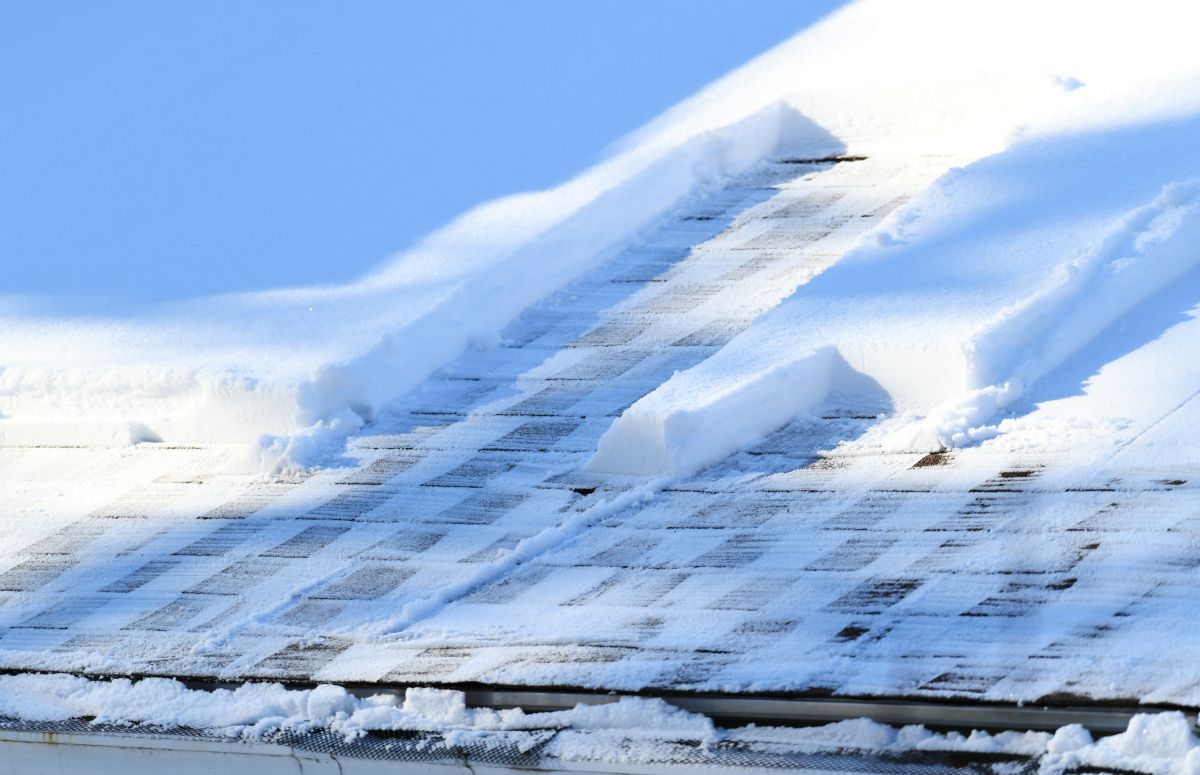
Why Old St. Paul Homes Get the Worst Ice Dams (and How to Actually Fix It)
Every February, the same photograph repeats across St. Paul: icicle curtains draping bungalow eaves, ice ridges armoring story-and-a-half rooflines, and — inside — the telltale stain spreading across a plaster ceiling that survived ninety winters before this one. It isn’t bad luck, and it isn’t your imagination: St. Paul’s signature housing eras are architecturally predisposed to ice dams, and the worst offender — the story-and-a-half — was built here by the thousand. The good news buried in the diagnosis: ice dams are physics, physics has fixes, and even century-old framing can be brought to peace with Minnesota winters. Here’s the complete old-house edition of the ice dam story — cause, cure, triage, and the claims angle — from a crew that spends every winter on exactly these rooflines.
The Physics, Briefly (Then the St. Paul Part)
All ice dams share one engine: heat escaping into the attic melts the snowpack’s underside; meltwater runs down to the cold overhanging eave and refreezes; the growing ridge dams later meltwater into a pond that swims uphill under shingles. Shingles shed falling water — nothing about them resists a standing pool. So far, universal. The St. Paul part is what this city’s beloved housing eras do to each variable — and it explains why your block out-dams the suburbs every winter.
The Half-Story Problem (St. Paul’s Signature Dam Factory)
The story-and-a-half — the compact 1940s–50s design filling whole East Side and Highland blocks — puts finished living space directly against the roof: kneewalls, sloped ceilings, and a tiny peak attic, with two-inch rafter cavities carrying whatever insulation 1948 could imagine. The result is a roof deck warmed by the bedroom beneath it across most of its area, with no attic buffer and almost no room to add one conventionally. Bungalows repeat the pattern wherever their half-stories were finished, and add dormers — every dormer a collection of valleys and short eaves where ice concentrates. Victorians contribute complexity: multiple roof planes dumping onto each other, dead valleys, and additions meeting original rooflines at ice-loving angles. Layer on the eras’ shared traits — balloon framing that channels warm air upward, original ventilation that ranges from minimal to mythical, and knob-and-tube wiring that historically kept insulation out of walls — and the February photograph explains itself. Your house isn’t failing; it’s performing its era’s design exactly as built. The fix is retrofitting what the era didn’t know.
What Actually Works on Old St. Paul Homes
In effectiveness order, adapted for century framing. Air sealing the attainable: even half-story homes have accessible bypasses — the peak attic’s hatch and chases, kneewall doors and floors, bath fans venting indoors (an epidemic in these houses) — and sealing them buys real improvement at handyman prices. Insulating within the era’s limits: peak attics take blown depth easily; kneewall spaces benefit from proper treatment; and the sloped-ceiling cavities — the hard 20% — have real answers, from dense-pack to the definitive one below. Ventilation where framing allows: old roofs accept intake and ridge improvements more often than assumed, though honest contractors will tell you when a design simply won’t breathe like a modern attic — and plan protection accordingly. The reroof reset: here’s the old-house trump card — at replacement time, generous ice-and-water membrane (eaves, valleys, dormers, and low-pitch transitions, well past code minimums) plus exterior insulation options makes even a warm-deck story-and-a-half effectively dam-proofed at the waterline; it’s why our reroofs on these blocks treat membrane strategy as the headline, not a line item. And the honorable mentions: roof raking after big snows (genuinely useful on short story-and-a-half eaves — one of the few homes where a rake reaches everything) and heat cables as targeted symptom management at chronic spots, never as the plan.
When Water’s Already Coming Through the Plaster
Old-house triage order: protect the interior — move what matters, catch what’s dripping, and pierce a sagging plaster bulge at its low point over a bucket before it chooses its own moment; photograph everything with timestamps — stains, the dam, the icicles — because sudden ice-dam water damage is commonly covered by Minnesota homeowners policies, and documentation decides claims; relieve safely from the ground — calcium chloride socks laid vertically across the dam melt drainage channels (never rock salt near old masonry and plantings, never hatchets near old shingles); steam, don’t chip — if the dam must go, professional steaming is the only method that doesn’t take shingle life with it; and book the spring autopsy — dams lift shingles, tear underlayment, and bend gutters in ways that surface as mystery leaks next fall; our free Wise Check documents the damage while repair is still repair-sized, and doubles as your claim evidence.
The Long Game for Century Homes
A realistic sequence for owners planning in decades (as old-house owners do): this winter, seal the attainable bypasses and rake the eaves after big snows; this spring, get the roof-and-attic assessment that maps your specific house’s heat leaks (frost patterns and staining tell the story better in cold months — winter inspections read old attics beautifully); at the next reroof — whenever it comes — spend the membrane-and-ventilation money like the insurance it is; and treat any interior water event as both a repair and a data point. St. Paul’s housing stock has outlasted every winter since Cleveland was president — not by ignoring physics, but by generations of owners retrofitting what each era learned. Ice dam science is simply this generation’s contribution. Your plaster will thank you.
And a final note of old-house solidarity: if this is your first winter in a St. Paul story-and-a-half, know that the icicles are not a personal failing — they’re a rite of passage shared by every owner on your block since the Truman administration. The difference between charming rite and expensive ritual is simply whether this is the year you map the heat leaks and plan the fix. The houses that got there are easy to spot each February: they’re the ones wearing clean eaves while the neighbors grow chandeliers.
Frequently Asked Questions
Why do St. Paul’s older homes get such bad ice dams?
The city’s signature eras — story-and-a-halfs especially — put heated living space directly against the roof deck with minimal insulation room, no attic buffer, and original ventilation. The design melts snow from below by default; retrofits correct it.
Can you fix ice dams on a story-and-a-half house?
Yes — air sealing and peak-attic insulation help immediately, and at reroof time, generous ice-and-water membrane effectively dam-proofs the waterline even where framing limits ventilation. It’s a solved problem with old-house methods.
Is ice dam water damage covered by insurance?
Sudden interior damage commonly is under Minnesota policies; gradual seepage and removal costs vary. Timestamped photos of the dam and damage decide outcomes — document before cleanup.
How do I remove an ice dam without wrecking old shingles?
From the ground: rake snow and lay calcium chloride socks for relief channels. On the roof: professional steaming only — chipping and chiseling cost shingle life every time.
Should old homes get winter roof inspections?
Winter is actually ideal for diagnosis — frost patterns and active dams map heat loss precisely. Free winter Wise Checks are some of the most useful inspections we run in this city.
Tired of February’s plaster lottery? Get your house’s specific dam map — free, photo-documented, old-home fluent: book a Wise Check or call (651) 977-6027.
